
REBAR TYING: Supporting the Concrete Industry with Automation and Ergonomic Solutions
Since 2020, U.S. construction demand has hit record highs. But with fewer skilled workers available, the industry faces growing challenges. Safety and health concerns are rising, and injury costs are adding pressure. To keep up, companies need smart, flexible solutions. This page, by experts in industrial health and product design, looks at rebar tying—a key task in concrete work. It highlights real ways to reduce risks, improve safety, and boost productivity using automation and ergonomic tools.




Rebar workers, also called rodbusters, lift, place, and tie heavy steel bars. This job is tough on the body, especially with repeated bending and lifting over long hours. Because of this, many workers develop muscle and joint problems. In fact, 86% of rodbusters report having back pain while doing rebar tying work.


In 2019, musculoskeletal disorders (MSDs) made up 28% of all non-fatal work injuries that led to missed workdays, according to the US Bureau of Labor Statistics. Construction work is tough on the body, so MSDs are common. They cause over half of all injuries and illnesses in the U.S. construction industry.

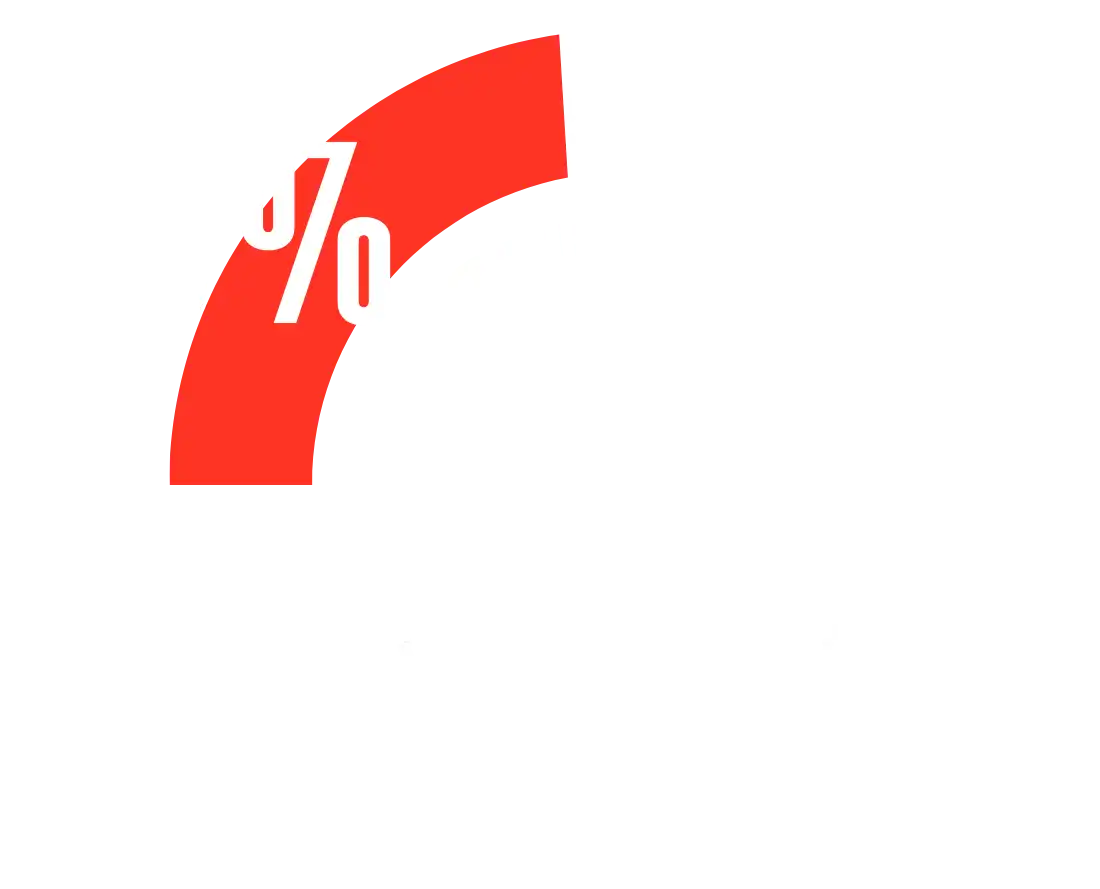 The construction workforce is aging, with a median age of 41.2 in 2022, and 45% of workers aged 45 or older. Musculoskeletal disorders (MSDs) make things worse. Workers aged 45–64 have the highest compensation claim costs — over $25,000 per year — not counting lost workdays. MSDs create major financial strain on the industry.
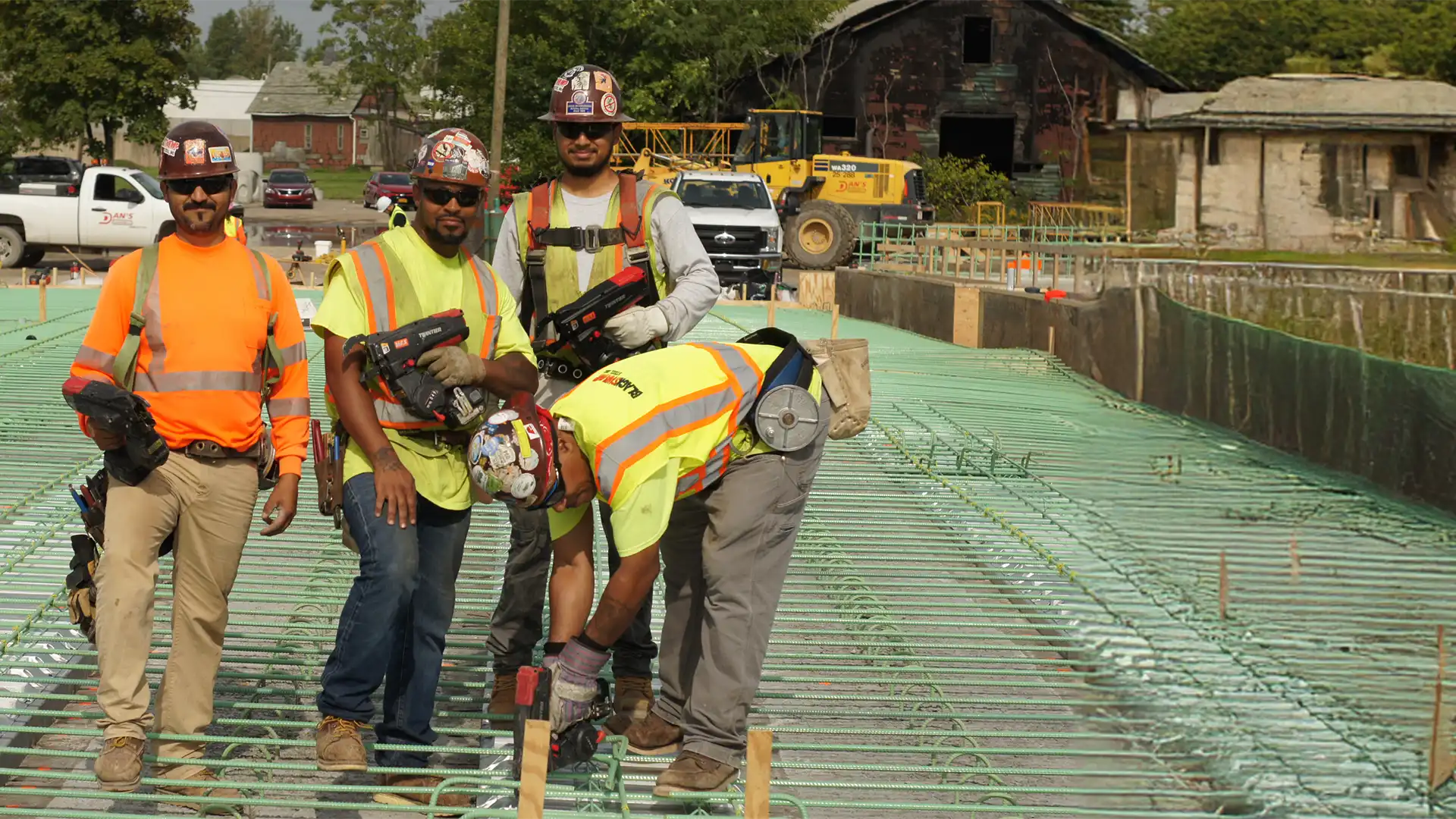
Studies show it cuts down on awkward postures of the back, wrists, and arms, lowering the risk of injury. It also boosts tying speed and reduces strain on the lower back, helping workers stay safer and more efficient on the job.
Studies show it cuts down on awkward postures of the back, wrists, and arms, lowering the risk of injury. It also boosts tying speed and reduces strain on the lower back, helping workers stay safer and more efficient on the job.


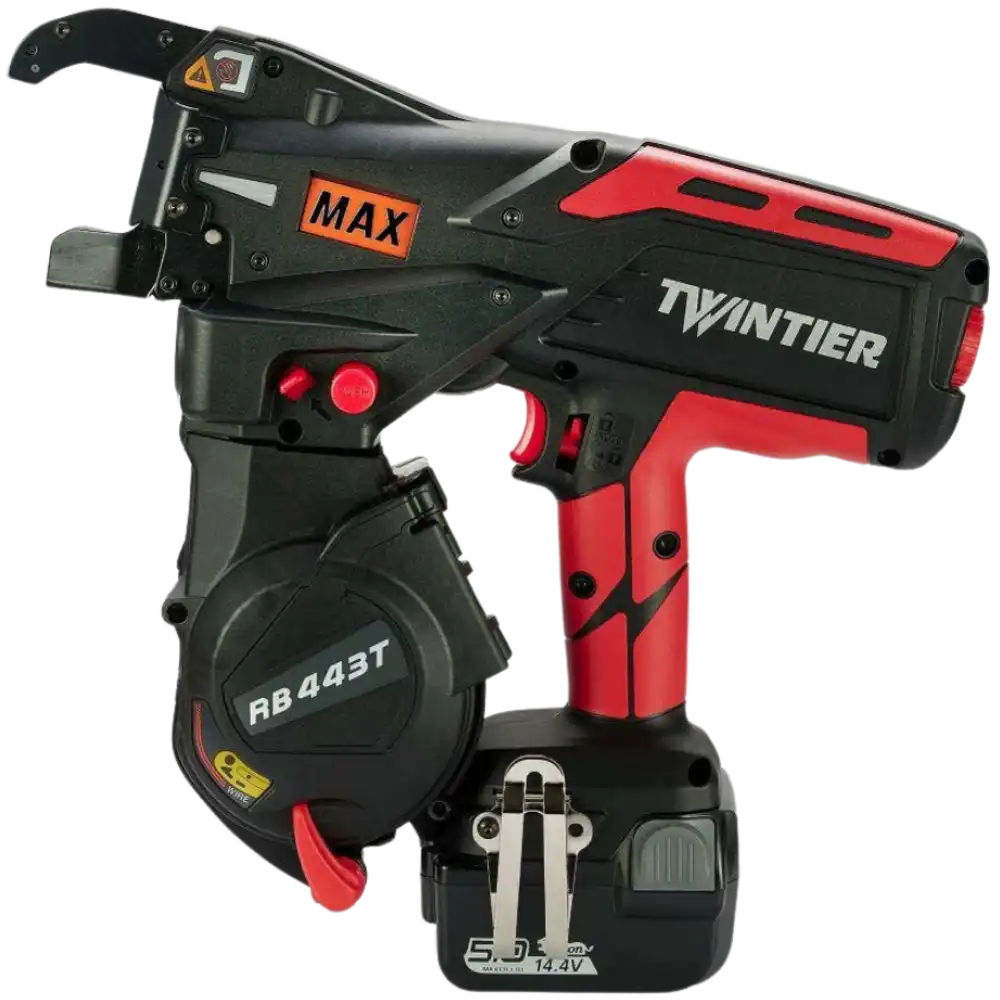






According to industry data, 86% of rodbusters experience back pain during rebar tying work. Introducing the Stand-Up TwinTier® RB401T-E from MAX—the world’s first stand-up rebar tying tool developed to reduce musculoskeletal strain and minimize back-related injuries. The MAX Advantage starts with in-house R&D, engineering, and manufacturing, and is driven by customer feedback. By continuously refining our tools based on real-world input, we aim to meet the evolving needs of professionals in the field.

Studies show tying rebar by hand leads to REBA scores 3.27 points higher than using the stand-up tool. With 95% confidence, the difference ranges from 1.79 to 4.74 points. Tying with the RB401T-E indicates a 38% lower risk of MSDs, showing reduced strain and injury risk.
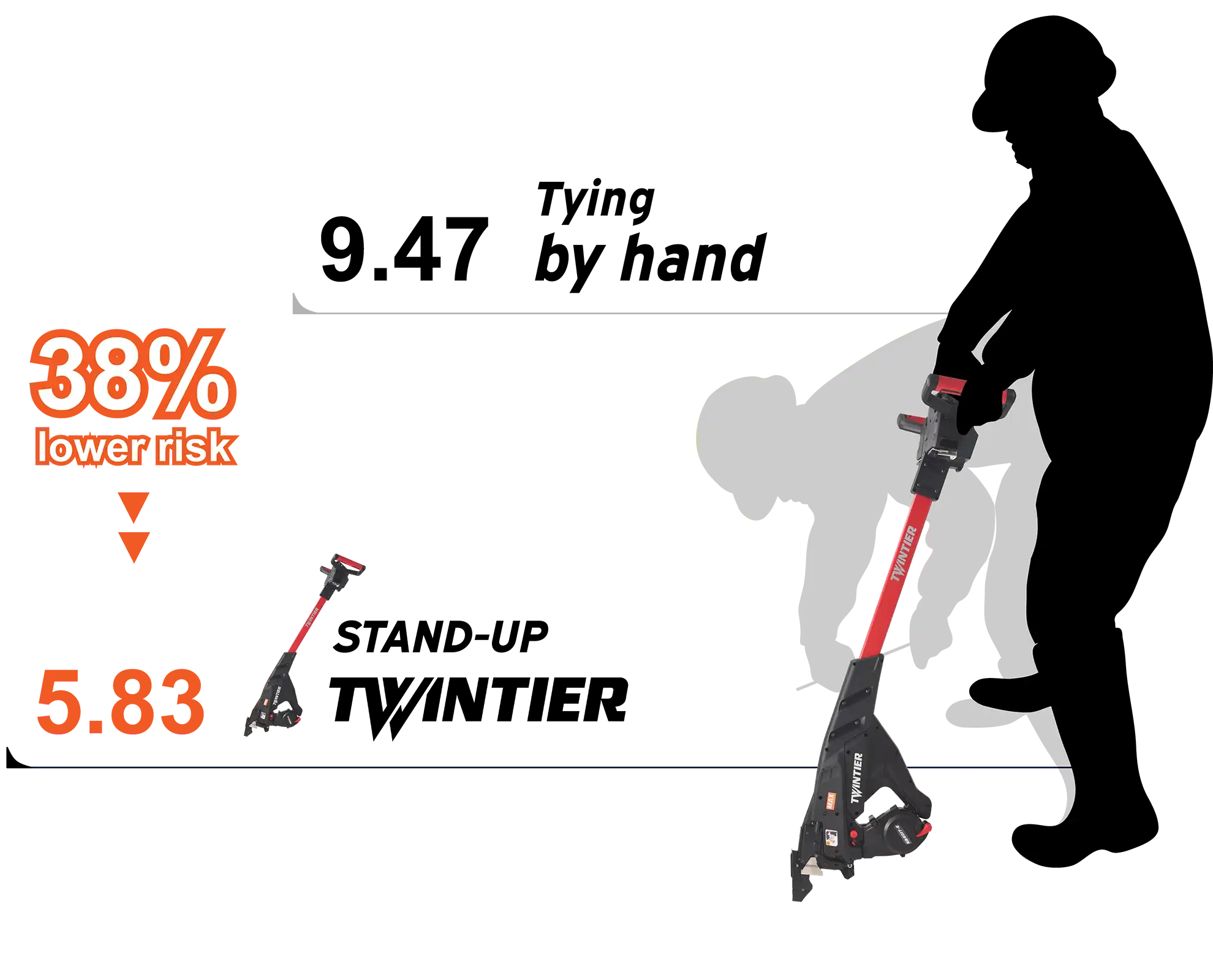

By using the Rebar Tying Tool, the risk of MSDs in various parts of the body can be significantly reduced. It has been shown that the safe exposure time for the back is 71% longer compared to tying rebar by hand.

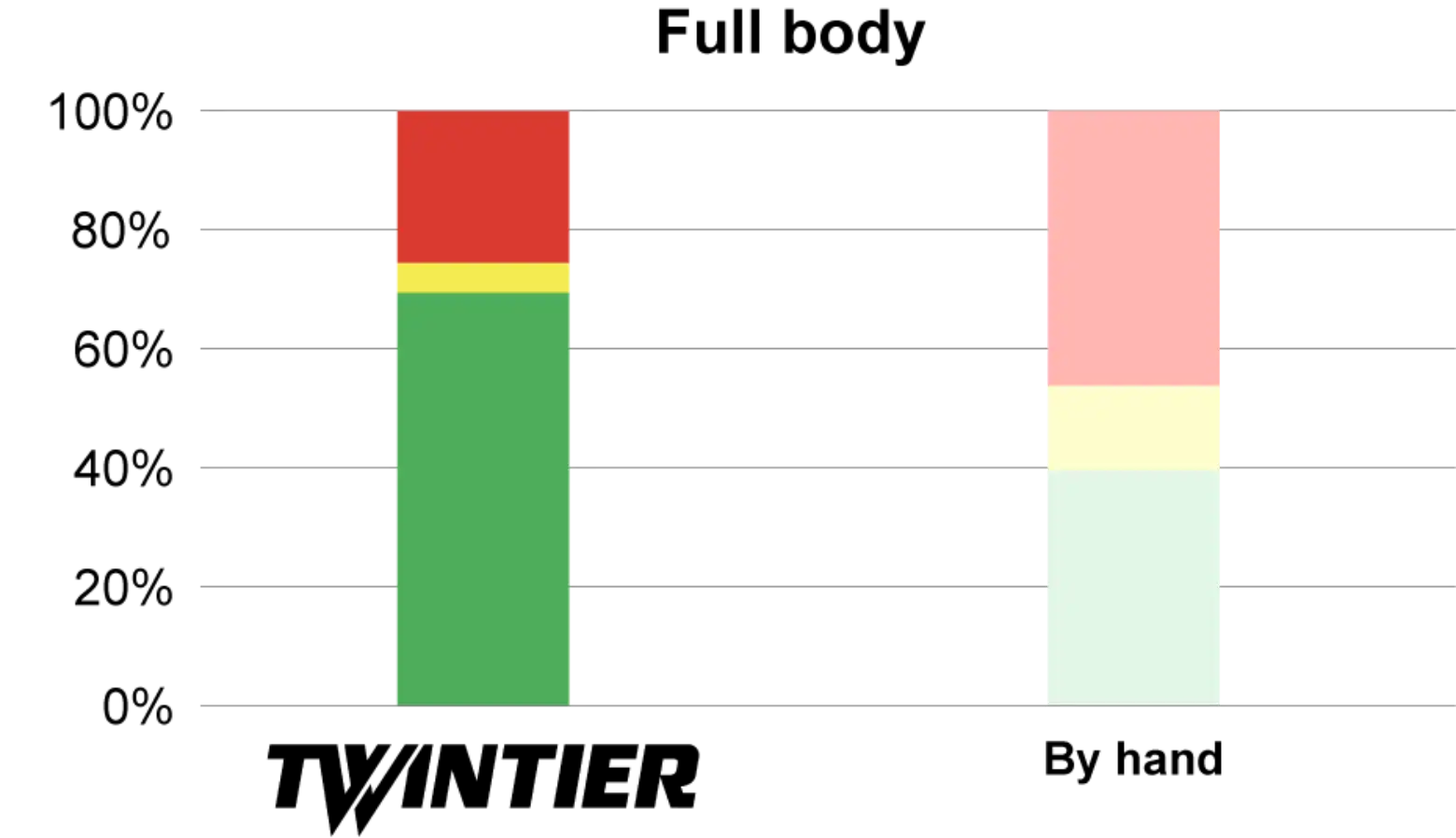
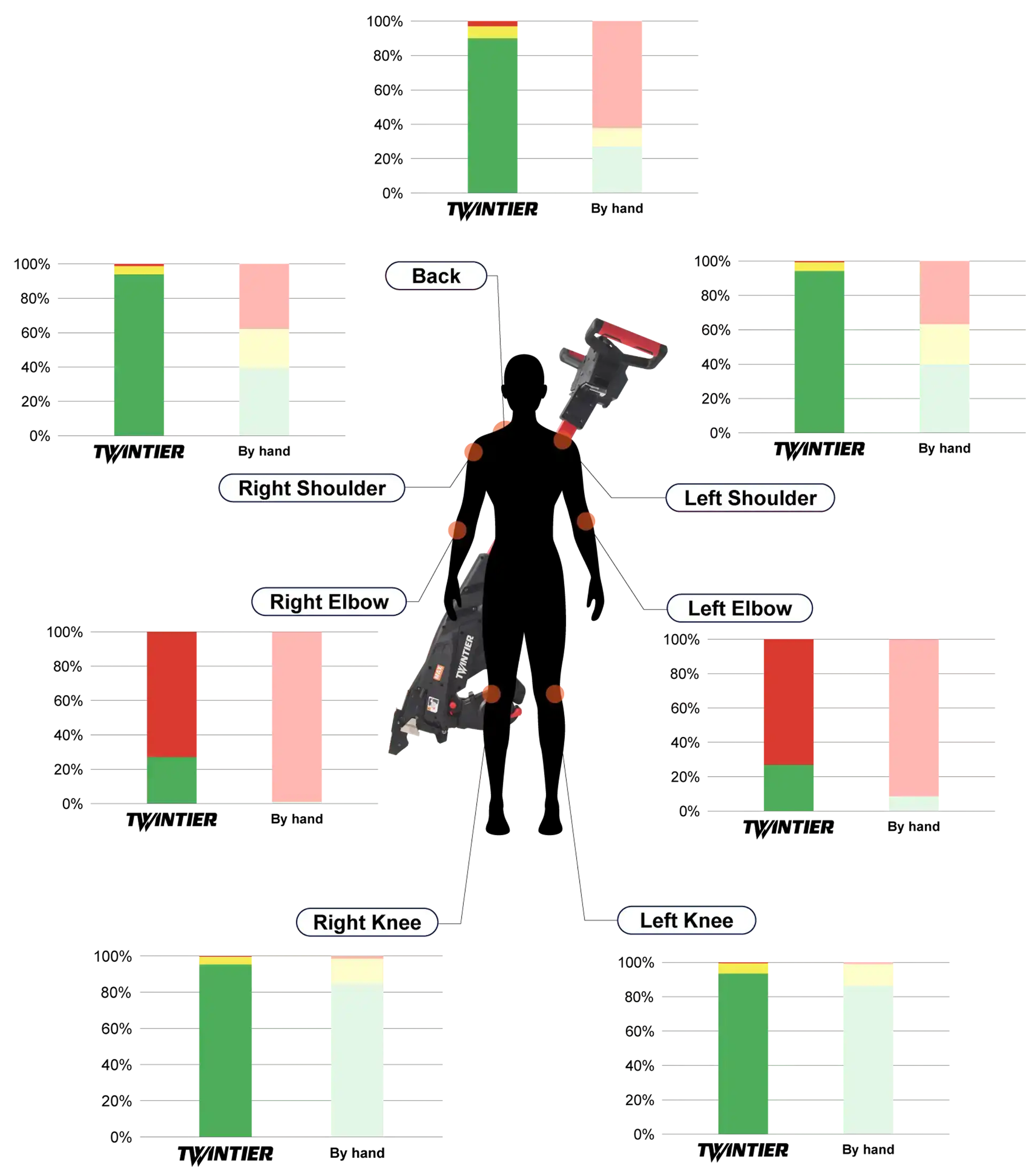

Workers’ tying times improved significantly when using the rebar tying gun. The average time to tie one snap-tie was reduced by 47% with the TWINTIER. Additionally, the variance in tying times was much lower, suggesting that job completion times can be more accurately predicted with the rebar tying guns.

Alex Pickel, Safety Director at Iroquois Construction, reports that MAX’s Twin Tier tool has significantly reduced injuries and accidents on their job sites. By earning credits under their workers’ compensation policy, companies can lower their insurance premiums. At the same time, the Twin Tier enhances productivity and helps extend workers’ career longevity through improved safety measures.


